
1. Quick match by connection pattern
The Eastern Caribbean splits into three connection patterns: fly-in islands with their own international airport, ferry-dependent islands reached through a larger neighbor, and islands that require an international sea or air crossing. The pattern decides the transfer plan more than the island's reputation does.
| Island | Connection pattern | Best for |
|---|---|---|
| Barbados | Direct international flights (BGI) | Flexible road-based stay, easiest single-base logistics |
| Saint Lucia | Direct international flights (UVF or SLU) | Mountainous scenery; base choice matters more than on a flatter island |
| Jamaica | Direct flights to Montego Bay (MBJ) or Kingston (KIN) | Resort, culture, food, music, and beaches; airport-to-base road time is the deciding factor |
| St. Thomas / St. John | Fly into St. Thomas (STT), ferry to St. John | National-park beaches on St. John with US Virgin Islands convenience |
| Anguilla | International sea or air crossing, often via St. Martin | Quiet, upscale stay once the crossing is planned properly |
2. Barbados vs Saint Lucia: the two fly-in bases
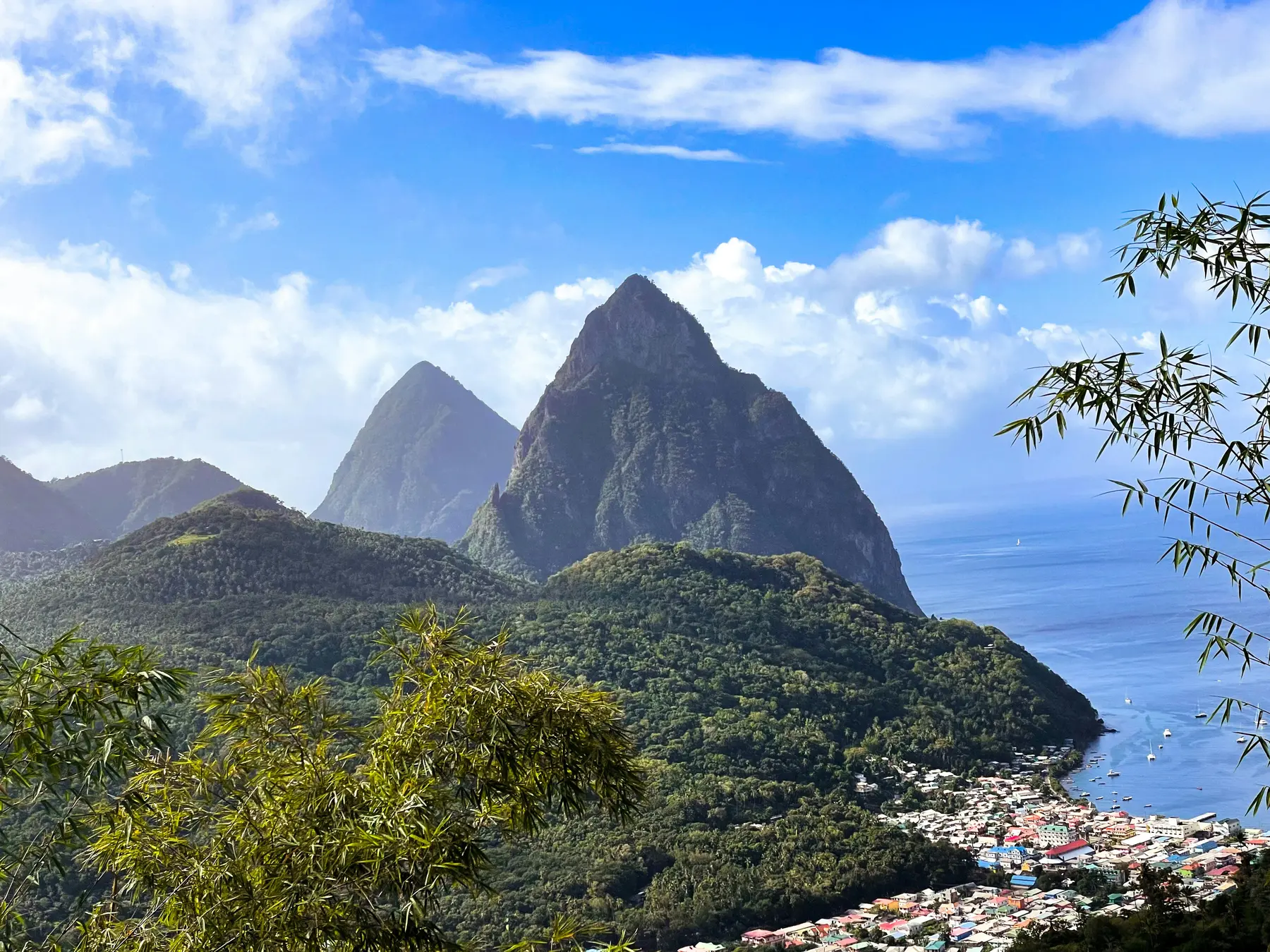
Barbados is the more flexible single-base island — a ring road, reliable taxis and rentals, and no need to commit to one coast. Saint Lucia's volcanic geography means the base decision matters more: the north (Rodney Bay) suits nightlife and convenience, while the south (Soufrière) puts the Pitons and reef diving at the doorstep but adds real drive time to the airport.
See the full Barbados vs Saint Lucia breakdown
Road access, base location, and trip-style fit in more detail.
3. St. Thomas and St. John: the ferry-dependent pair
St. Thomas has the airport, the cruise-ship infrastructure, and most of the nightlife; St. John — reached by a short ferry — has the Virgin Islands National Park beaches and a quieter pace. Most trips base on St. John for the beaches and treat St. Thomas as the airport-and-provisioning stop, or split the stay across both.
Plan the St. Thomas to St. John connection
Ferry schedule, luggage handling, and timing before booking either side.
4. Anguilla: the international-crossing base
Anguilla has no direct long-haul flights; most visitors arrive via a ferry or short flight from St. Martin/Sint Maarten, which means an international border crossing is part of the itinerary even for a beach-focused trip. Once that crossing is planned — including which St. Martin ferry terminal and what identification is required — Anguilla rewards the extra step with quieter beaches and a slower pace than its more accessible neighbors.
Plan the Saint-Martin to Anguilla ferry
Terminal choice, schedule, and documentation before the crossing.
5. Jamaica: choose the airport and coast together
Jamaica is a major Caribbean fly-in destination, but it should not be treated as one interchangeable resort zone. Montego Bay, Negril, Ocho Rios, Kingston, Port Antonio, and the South Coast create very different road times and trip styles. Match the base to the arrival airport before comparing accommodation: MBJ usually serves Montego Bay, Negril, and much of the north coast most efficiently, while KIN is the practical gateway for Kingston, the Blue Mountains, and eastern Jamaica.
Compare Jamaican bases, airports, routes, and planning tools
Use the dedicated Jamaica atlas for detailed destination guidance, then return to the IslandTravelAtlas Stay Finder to compare current accommodation options.
6. One base, or combine islands
A single-base trip on a fly-in island (Barbados or Saint Lucia) carries the least connection risk. Combining islands — St. Thomas with St. John, or a Saint-Martin stopover before Anguilla — adds a ferry or crossing leg that should get its own buffer day, especially during hurricane season when schedules are more likely to shift.
7. Base-choice checklist
- The connection pattern (fly-in, ferry-dependent, or international crossing) is confirmed for the chosen island.
- Accommodation location accounts for actual drive or ferry time to the airport, not straight-line distance.
- A buffer day is built in around any ferry or border crossing.
- Hurricane-season timing has been checked if traveling June through November.
- A fallback exists if a ferry or crossing is delayed.
The Bahamas
Choose Nassau, Grand Bahama or an Out Island by access pattern
Nassau and Paradise Island suit travelers prioritizing broad flight access, large resorts, dining and simple arrival logistics. Grand Bahama operates through Freeport as a separate fly-in destination. Eleuthera, Harbour Island, Abaco, Bimini and the Exumas reward a more island-specific trip, but the exact airport, ferry, water taxi, baggage limit and final return connection must be planned before the hotel.
The best Bahamas base is therefore the island whose full access route fits the trip—not whichever property appears first in a regional accommodation search.
Compare Bahamas island basesOfficial sources and live verification
Use these sources to confirm current ferry schedules, airport connections, and entry requirements before booking.