
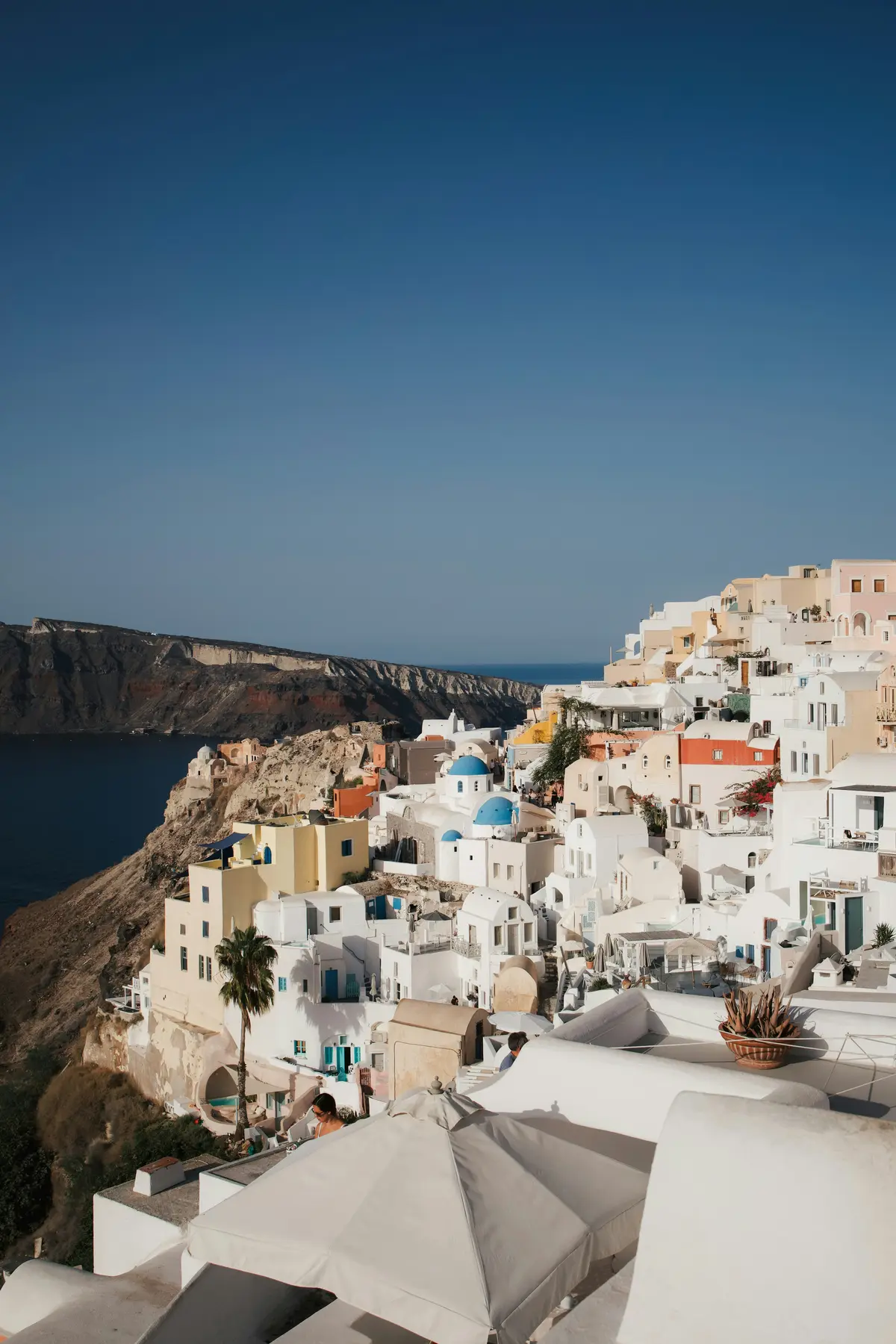
1. Quick match by trip style
Every Greek island trades off the same three things: ferry connectivity, price level, and pace. Decide what the trip is actually for before picking the island that's trending.
| Island | Best for | Main tradeoff |
|---|---|---|
| Santorini | Caldera views, sunset, honeymoons, short stays | Highest cost; steep steps and limited beach access in the caldera towns |
| Mykonos | Nightlife, beach clubs, short ferry hop to Delos | Peak-season pricing and crowding; quieter areas require a car or bus |
| Naxos | Families, longer stays, real beaches, lower cost | Fewer direct international flights; more of a self-drive island |
| Paros | Central ferry hub, balanced pace, day trips | Less dramatic scenery than Santorini or the smaller Cyclades |
| Milos | Quiet beaches, boat tours, slower trips | Fewer direct connections; best reached via Piraeus or a Cyclades hop |
2. Santorini: caldera views, at caldera prices
Santorini works best for short, high-impact stays built around the caldera view — Oia for sunset, Fira or Imerovigli for a central base with fewer crowds at the rim. Accommodation prices rise sharply for caldera-view rooms in peak season, and many caldera-town properties involve stairs rather than vehicle access to the door.
The island has its own airport (JTR) with seasonal direct and connecting flights, and a ferry port at Athinios that receives high-speed and conventional ferries from Piraeus and other Cyclades islands. Athinios sits below the caldera towns, so factor in the transfer up before booking a tight connection.
3. Mykonos: nightlife and beach clubs, with an easy Delos side trip
Mykonos Town (Chora) is the classic base for walkable dining, boutique shopping, and nightlife, with beach clubs a short taxi or bus ride away along the south coast. It also has the shortest ferry hop in the Cyclades to Delos, a UNESCO archaeological site that works well as a half-day trip.
Mykonos has its own airport (JMK) with frequent seasonal connections, plus a ferry port with high-speed links to Santorini, Naxos, Paros, and Piraeus. Peak-season accommodation and taxi availability are the two biggest planning risks — book transfers in advance rather than assuming one will be available on arrival.
4. Naxos and Paros: the balanced, lower-cost bases
Naxos is the largest Cycladic island and the strongest choice for families or longer stays — real sandy beaches, a walkable old town, and generally lower prices than Santorini or Mykonos. Paros sits at the center of the ferry network, making it a practical hub for day trips to smaller islands without committing to a single-island stay.
Naxos has its own small airport with limited seasonal routes; most visitors arrive by ferry from Piraeus, Athens-area ports, or a connecting Cyclades hop. Paros is similarly ferry-first, with strong connectivity to Naxos, Santorini, Mykonos, and Piraeus.
See the full Naxos vs Paros breakdown
Ferry frequency, beach access, and cost comparison in more detail.
5. Milos and the quieter Cyclades
Milos is best known for its volcanic coastline and boat-tour beaches (Sarakiniko, Kleftiko), and suits travelers prioritizing a slower pace over nightlife or dense sightseeing. Connectivity is the tradeoff: fewer direct routes than Santorini, Mykonos, Naxos, or Paros, so it usually works better as one stop on a longer island-hopping route than as a sole base with a short window either side.
6. One base, or island-hop
A single-base trip of five nights or more reduces ferry risk and luggage handling, and usually costs less overall once transfers and ferry tickets are counted. Island-hopping adds variety but also adds ferry-cancellation exposure — Aegean ferries are weather-sensitive, and a single missed sailing can cascade through the rest of a tight itinerary.
If the trip is under seven nights total, one base with a day-trip or two is generally the lower-risk plan. Longer trips can support two or three bases if each ferry leg has a buffer day either side.
Build the full hopping sequence
See the 7-day route this base-choice guide feeds into.
7. Base-choice checklist
- The trip's main goal (views, nightlife, family, quiet) matches the island's actual strength.
- Arrival point (island airport vs. Athens plus ferry) is confirmed for the season.
- Peak-season accommodation is booked well ahead for Santorini or Mykonos.
- Ferry buffer days are built in if hopping between more than one base.
- A fallback exists if a ferry is cancelled for weather.
Official sources and live verification
Use these sources to confirm current ferry schedules, airport connections, and site information before booking.